



Water-Repellent and Coated Zippers
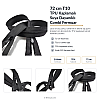
-100x100.png "20 cm TPU Combi Waterproof Zipper NC0020SG")
-100x100.png "73 cm TPU Combi Waterproof Zipper NC0073SG")
What Is a Water-Repellent Zipper?
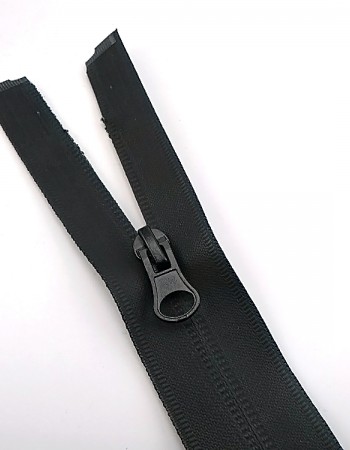
A water-repellent zipper normally uses a protective film on the visible face of zipper tape or reverse-positioned nylon coil. The coating can help reduce rain, splashes and surface moisture entering through the zipper face while creating a smooth technical appearance.
These products are commonly marketed as waterproof zippers. Unless a defined water-pressure or watertightness test has been verified, the technically safer description is water-repellent, water-resistant or film-coated zipper.
Selection by Application
| Application | Zipper Approach | Important Check |
|---|---|---|
| Jacket and coat pocket | 16–24 cm / 6.30–9.45 in closed-end coated zipper | Measure the real pocket opening and confirm slider direction. |
| Outdoor bag and equipment case | Short ready-length or coated continuous chain | Test curves, slider count and end finishing. |
| Rainwear, softshell and technical jacket | 60–73 cm / 23.62–28.74 in open-end coated zipper | Plan the centre-front length, bottom hardware and seam sealing. |
| Long technical outerwear | Long open-end or verified two-way separating zipper | Use two sliders only where lower-opening operation is required. |
| Footwear and boot panel | Short lower-profile coated zipper | Test bending, abrasion and contact with the footwear material. |
| Variable-size workshop production | Coated continuous zipper chain | Plan sliders, stops and end preparation separately. |
Verified Length Conversions
| Metric Length | Imperial Equivalent | Possible Use |
|---|---|---|
| 16 cm | 6.30 in | Compact pocket or bag section |
| 17 cm | 6.69 in | Jacket pocket or technical accessory |
| 20 cm | 7.87 in | Pocket, case or small bag closure |
| 24 cm | 9.45 in | Jacket pocket, bag or footwear panel |
| 60 cm | 23.62 in | Jacket and outerwear front |
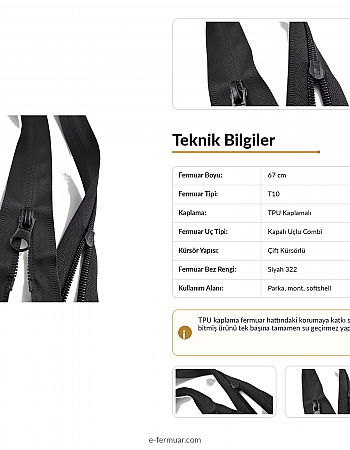
| 67 cm | 26.38 in | Longer outerwear closure |
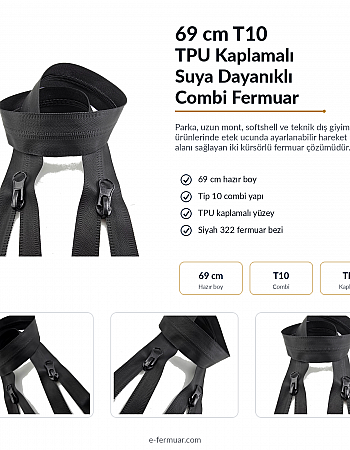
| 69 cm | 27.17 in | Technical outerwear or equipment |
| 70 cm | 27.56 in | Jacket, coat and technical garment |
| 72 cm | 28.35 in | Long technical outerwear |
| 73 cm | 28.74 in | Long outerwear or equipment closure |
Coated Zipper vs. Watertight Zipper
A coated zipper can reduce water passing through the zipper face. Slider junctions, top and bottom ends and needle holes may remain potential entry points.
Use “waterproof” or “watertight” as a technical performance claim only where the exact zipper and finished construction have been tested for that purpose.
TPU- and PU-Coated Zippers
A TPU-coated zipper uses a thermoplastic polyurethane-based film. A PU-coated zipper uses a polyurethane-based treatment or film.
The name of the coating does not confirm a universal temperature, chemical, washing or abrasion rating. Product-specific technical documentation and application testing are required.
#3 and #5 Coated Nylon Coil Zippers
Turkish Type 5 nylon coil corresponds to #3 coated nylon coil in English product naming. Turkish Type 10 corresponds to #5 coated nylon coil.
The nominal size does not provide a waterproof or strength rating. Tape, coating, slider, ends and installation must also be approved.
Closed-End, Separating and Two-Way Construction
A closed-end zipper remains joined at the bottom and may suit pockets, bags, cases and footwear.
An open-end separating zipper allows both tape halves to detach and is used for jackets, rainwear and technical outerwear.
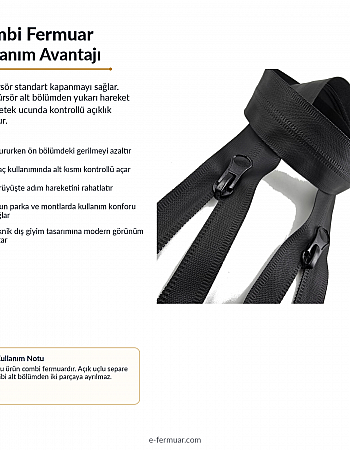
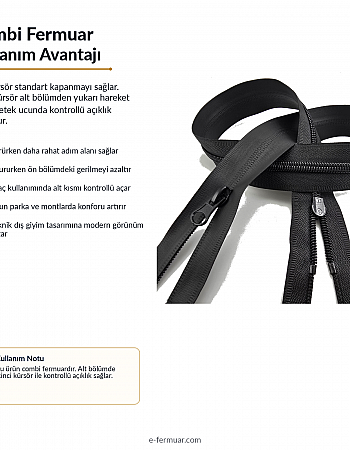
A two-way or combi zipper uses two separate slider bodies and can open from the lower section. It must not be confused with an ordinary separating zipper or one double-pull slider.
Ready-Length and Continuous Coated Chain
A ready-length zipper includes a defined functional length, slider and prepared end construction.
Continuous chain is cut during production and still requires compatible sliders, secure end finishing and any required stops.
Sewing and Installation
- Do not scratch the coating with needles or sharp equipment.
- Do not sew unnecessarily close to the edge of the coating film.
- Test curved applications because the slider can stress or cut the film.
- Remember that needle holes may become water-entry points.
- Consider seam tape, storm flaps or additional sealing where required.
- Approve the zipper using the real fabric, lining, thread and sewing process.
Care Information
- Follow the product-specific care instructions first.
- Consider closing the zipper before washing.
- Do not apply direct high heat or an iron to the coating film.
- Avoid abrasive chemicals and hard brushes.
- Do not force a wet, dirty or obstructed slider.
- Peeling, cuts and film damage can reduce water-repellent performance.
Common Selection and Product-Data Errors
- Do not claim full waterproofing without verified test data.
- Do not combine separating and lower-opening functions in one filter value.
- Do not confuse two separate sliders with one double-pull slider.
- Do not publish unverified temperature limits for TPU or PU coatings.
- Do not list PVC or reflective variants unless they are actually offered.
- Do not claim suitability for diving or protective firefighting equipment without certification.
- Do not treat continuous chain as a finished zipper.
Frequently Asked Questions
Is a coated zipper completely waterproof?
Not by itself. The coating helps reduce water passing through the zipper face, while seams, slider gaps, ends, fabric and installation affect the finished protection level.
What is the difference between waterproof and water-repellent zippers?
A water-repellent zipper is designed to reduce rain and surface moisture entry. Waterproof or watertight performance requires verified testing under defined conditions.
Are TPU- and PU-coated zippers the same?
No. They describe different polyurethane-based coating structures. Product-specific performance must be confirmed from technical data and sample testing.
Is every coated separating zipper two-way?
No. A separating zipper allows the tapes to detach. A two-way model also requires two separate sliders and lower-opening operation.
Can coated zippers be used on bags?
Yes. They may be used on outdoor bags, equipment cases and technical compartments after curves, sliders and end finishing are tested.
Can water pass through the stitching?
Yes. Needle holes may become water-entry points, so seam tape, storm flaps or another sealing method may be required.
Are sliders included with coated continuous chain?
It depends on the product. Some items are chain only, while selected sets may include a stated number of compatible sliders.
Can a coated zipper be ironed?
High heat can damage the coating film. Do not apply direct ironing or heat unless the product-specific care instructions allow it.
Last updated: July 22, 2026
Business: E-Fermuar — zipper, slider and textile accessory supplier, Istanbul, Türkiye.
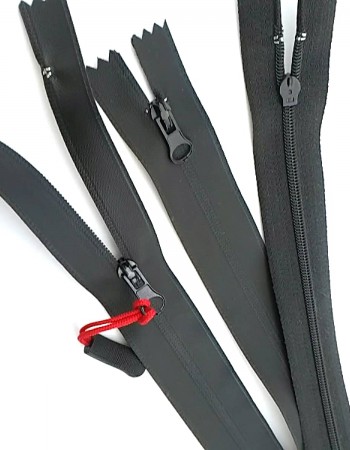
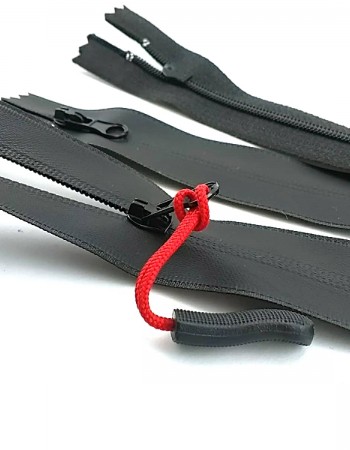
-350x450h.png "17 cm 6.69\" Type 10 Waterproof Zipper | For Jackets, Bags and Outdoor Use | ZP00017PR")
-350x450h.jpg "17 cm 6.69\" Type 10 Waterproof Zipper | For Jackets, Bags and Outdoor Use | ZP00017PR")
-350x450h.png "20 cm TPU Combi Waterproof Zipper NC0020SG")
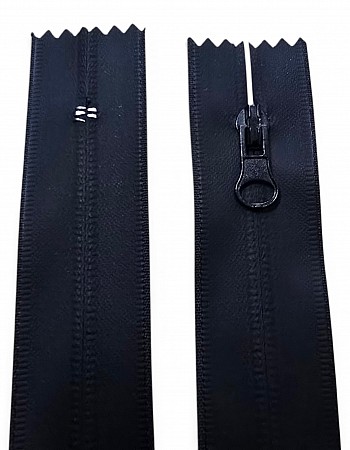
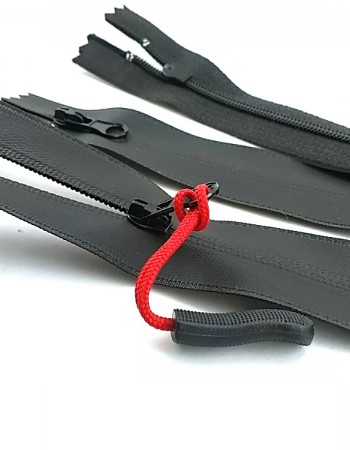
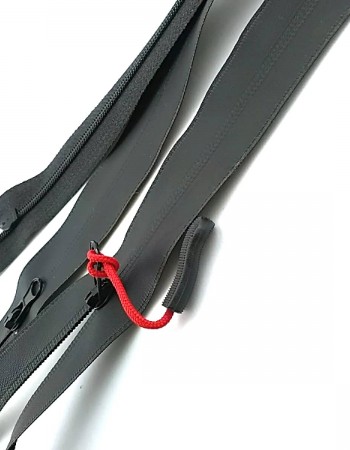
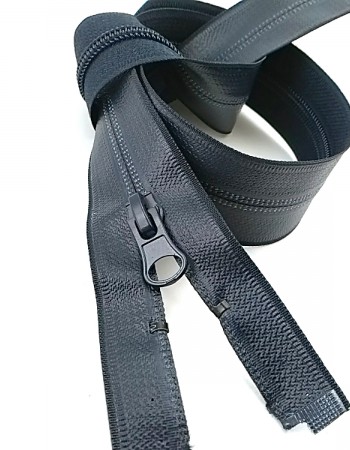
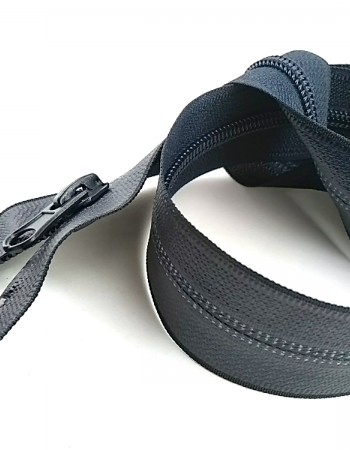
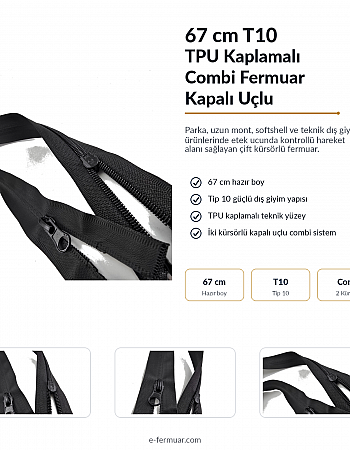
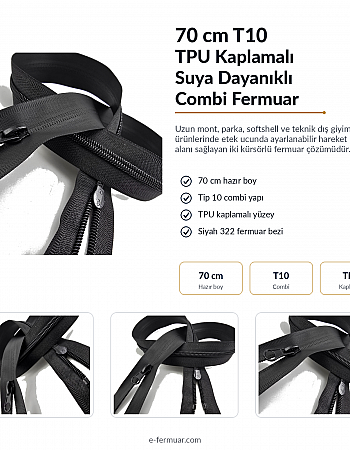
-350x450h.png "70 cm / 0,76 yrd Waterproof Jacket Zipper Black F0006TPU")
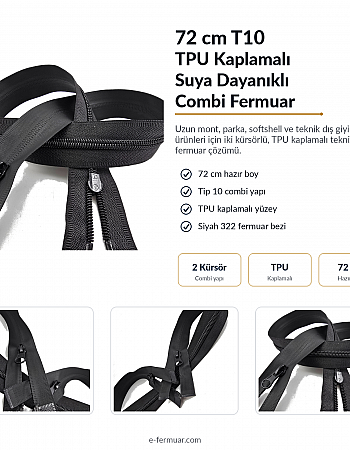
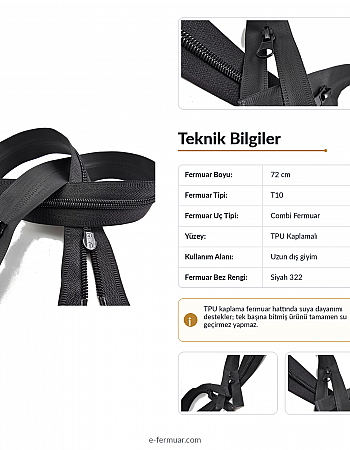
-350x450h.png "73 cm TPU Combi Waterproof Zipper NC0073SG")
-350x450h.png "73 cm TPU Combi Waterproof Zipper NC0073SG")
-350x450h.png "Waterproof 24 cm Zipper P00024PRC")
-350x450w.jpeg "Waterproof 24 cm Zipper P00024PRC")