Invisible Zippers


-100x100.webp "Hidden Zipper 35 cm Tulle Dress and Skirt Zipper ZPHSN0035TUL")
-100x100.webp "18 cm Tulle Ribbon Bottomed Concealed Zip Type 3 | For Dresses and Skirts | NC0018TUL")
What Is an Invisible Zipper?
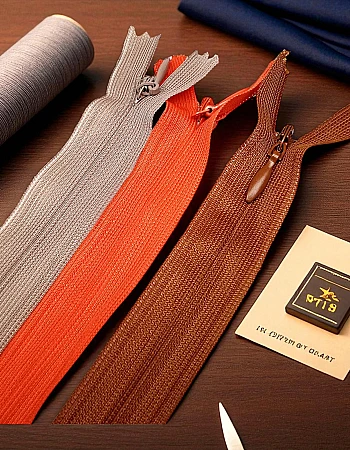
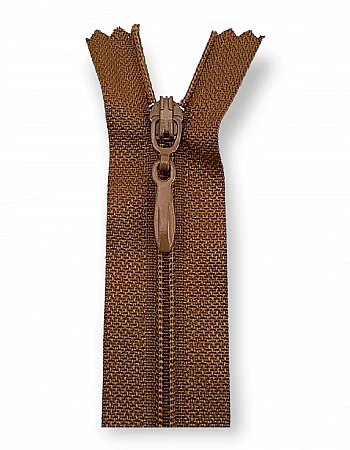
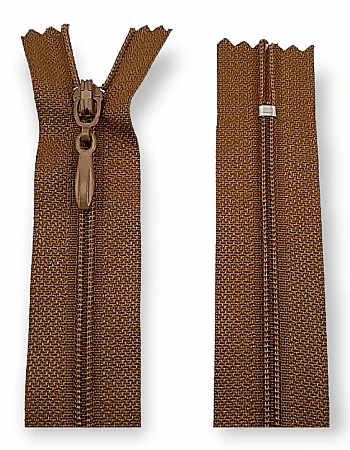
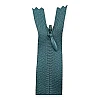
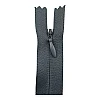
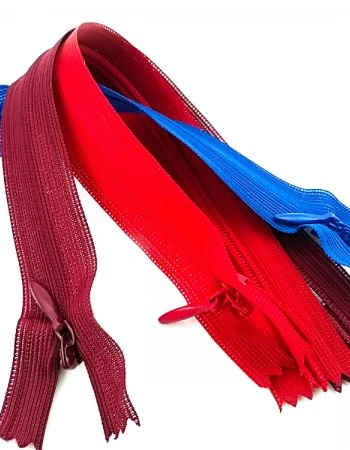
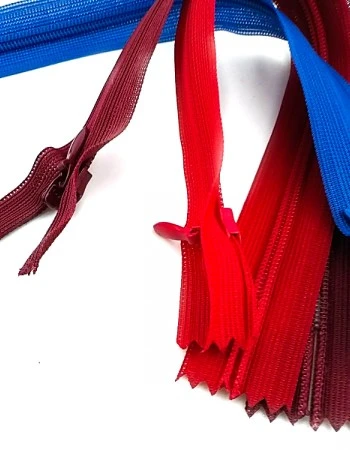
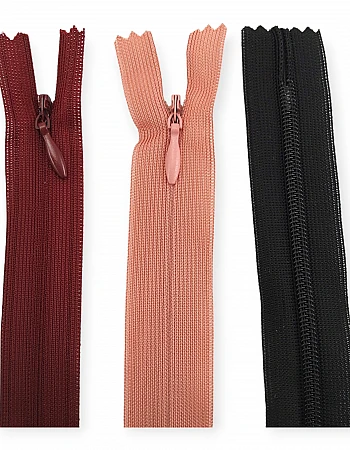
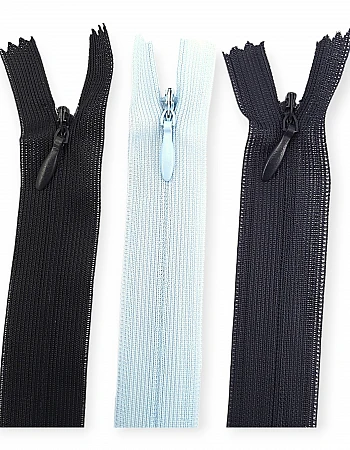
An invisible zipper is a closed-end nylon coil zipper whose chain is folded behind the tape. When sewn correctly, the coil sits inside the garment seam and only the pull tab and a narrow seam line remain visible from the outside.
This construction is widely used where the closure should not interrupt the design of a dress, skirt, gown or tailored garment.
Invisible Zipper Selection Guide
| Application | General Length Range | Important Check |
|---|---|---|
| Short skirt or women's trousers | 16–22 cm / 6.30–8.66 in | Measure the real side or back opening from the pattern. |
| Day dress or jumpsuit | 22–40 cm / 8.66–15.75 in | Provide enough opening for dressing without unnecessary zipper length. |
| Fitted formal dress | 35–60 cm / 13.78–23.62 in | Test the waist seam, lining and layered fabric bulk. |
| Bridal gown or long evening dress | 40–70 cm / 15.75–27.56 in | Test corsetry, lace, tulle and lining layers together. |
| Lace, organza and tulle fabric | Tulle- or woven-tulle-tape zipper | Check visibility, stiffness and seam distortion on a sample. |
| Medium-weight woven fabric | Standard woven-tape invisible zipper | Check that the tape does not ripple or pull the garment. |
These ranges are general guidance. The final zipper length must be approved from the real pattern and garment opening.
How Is Invisible Zipper Length Measured?
Measure the functional coil between the top stop and bottom stop. Do not include the additional tape above or below the working zipper section.
- Mark the zipper seam on the garment pattern.
- Measure the opening required for dressing and fitting.
- Include the effect of lining, waist seams and corsetry layers.
- Position the top and bottom stops within the garment construction.
- Approve the length on a sewn sample.
Invisible Zipper Length Conversion
| Metric Length | Imperial Equivalent | Possible Garment Use |
|---|---|---|
| 16 cm | 6.30 in | Short skirt, trousers or small opening |
| 18 cm | 7.09 in | Skirt, trousers, short dress or inner pocket |
| 20 cm | 7.87 in | Short garment closure |
| 22 cm | 8.66 in | Skirt, dress or lightweight pocket |
| 25 cm | 9.84 in | Skirt, dress or jumpsuit |
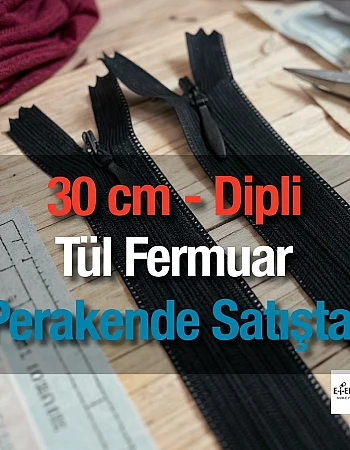
| 30 cm | 11.81 in | Dress and medium opening |
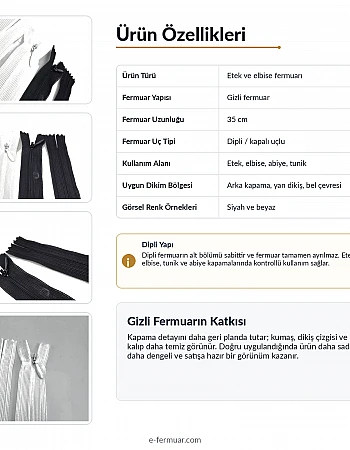
| 35 cm | 13.78 in | Dress, formalwear and fitted garments |
| 40 cm | 15.75 in | Longer dress and jumpsuit opening |
| 50 cm | 19.69 in | Formal dress and bridalwear |
| 55 cm | 21.65 in | Long dress and gown |
| 60 cm | 23.62 in | Bridal gown and long formalwear |
| 70 cm | 27.56 in | Extended gown or costume opening |
Standard Woven Tape and Tulle Tape
Standard woven tape provides a more visible woven textile structure and may suit dresses, skirts, jumpsuits and medium-weight fabrics.
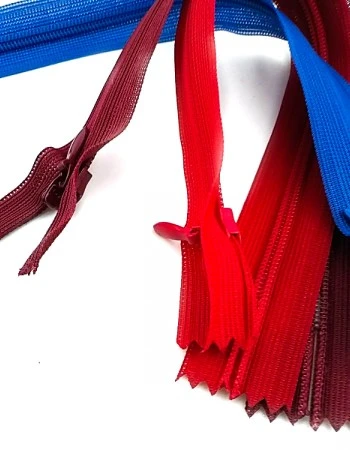
Tulle and woven-tulle tapes provide a lighter, more translucent appearance and may be considered for lace, organza, tulle and lightweight formal fabrics.
Tape construction does not guarantee fabric compatibility. Sew and inspect the zipper on the real fabric before production.
#3 Invisible Coil Zipper
English product data should identify the verified fine invisible chain as a #3 invisible coil zipper. Turkish Type 5 and mixed Type 3 labels should not be carried into English as separate sizes without physical gauge verification.
Invisible, Reverse-Coil and Reversible Zippers
An invisible zipper conceals the coil inside a garment seam. A reverse-coil zipper turns the spiral toward the reverse side but can still show the tape and stitching. A reversible zipper is designed to be operated from both faces.
These are three different constructions and should not share the same filter value.
How to Sew an Invisible Zipper
- Mark the seam line and seam allowance.
- Open the zipper and gently expose the folded coil.
- Align the zipper tape with the correct fabric face.
- Guide the coil through the channel of an invisible-zipper foot.
- Match the waist, pattern and top reference points on the second side.
- Close the zipper and check alignment.
- Complete the lower garment seam below the bottom stop.
Do not sew through the working coil. The needle should run close to the coil without piercing it.
Why Does an Invisible Zipper Ripple?
- The tape is stretched during sewing.
- One fabric side feeds faster than the other.
- The stitch length or thread tension is unsuitable.
- The fabric requires lightweight reinforcement.
- The zipper is too heavy or stiff for the fabric.
- Waist and pattern marks are not aligned.
Invisible Zippers for Bridalwear
Bridal and formal garments may combine lace, tulle, corsetry, lining and outer fabric along the same zipper seam. The complete layer structure must be tested rather than selecting the zipper from the outer fabric alone.
Beads, sequins and embroidery should not contact the coil or slider. Clear the embellishment path around the working zipper where necessary.
See related products in the dress and bridal zipper category.
Common Selection and Sewing Errors
- Do not use a reverse-coil zipper as an invisible zipper.
- Do not use a standard invisible zipper where both garment panels must separate.
- Do not select length from the total garment length.
- Do not treat Turkish Type 3 and Type 5 labels as separate gauges without verification.
- Do not assume tulle tape suits every lightweight fabric.
- Do not stitch through the coil.
- Do not approve color only from a digital screen.
- Do not begin bridal production without a full layered sample.
Frequently Asked Questions
What is an invisible zipper?
An invisible zipper is a closed-end nylon coil zipper designed so that the coil remains concealed inside the garment seam when sewn correctly.
Are invisible and reverse-coil zippers the same?
No. An invisible zipper conceals the coil inside the seam. A reverse-coil zipper turns the spiral toward the back but can still show the tape and stitching.
Which invisible zipper length should be used for a dress?
The final length depends on the actual garment opening. 22–40 cm / 8.66–15.75 in may suit day dresses, while 35–60 cm / 13.78–23.62 in may suit longer or fitted dresses.
Which fabrics can use a tulle-tape invisible zipper?
It may be considered for tulle, lace, organza and lightweight formal fabrics. Approve compatibility on a sewn sample.
Is a special foot required for an invisible zipper?
An invisible-zipper foot helps open the folded coil and keeps the stitching close to the chain for a cleaner concealed finish.
Why does an invisible zipper ripple?
Rippling can result from stretching, uneven fabric feeding, unsuitable tension, insufficient reinforcement or misaligned garment reference points.
Can an invisible zipper be open-end?
Standard dress and skirt invisible zippers are closed-end. A different separating zipper construction is required when both garment panels must detach.
How is invisible zipper length measured?
Measure the functional coil from the top stop to the bottom stop. Do not include additional tape left for sewing.
Last updated: July 22, 2026
Business: E-Fermuar — zipper, slider and textile accessory supplier, Istanbul, Türkiye.
-350x450h.webp "18 cm Tulle Ribbon Bottomed Concealed Zip Type 3 | For Dresses and Skirts | NC0018TUL")
-350x450h.webp "18 cm Tulle Ribbon Bottomed Concealed Zip Type 3 | For Dresses and Skirts | NC0018TUL")
-350x450h.webp "18 cm Woven Tulle Zipper - NC0018DTUL")
-350x450h.webp "18 cm Woven Tulle Zipper - NC0018DTUL")
_1-350x450h.webp "22 cm / 8.661 in Black Woven Tulle Closed-End Invisible Zipper for Dresses and Skirts – ZPG0022DKM")
_9-350x450h.webp "22 cm / 8.661 in Black Woven Tulle Closed-End Invisible Zipper for Dresses and Skirts – ZPG0022DKM")
-350x450h.webp "22 cm 8.66\" Concealed Zipper with Tulle Tape | Dress, Skirt and Inner Pocket Zipper | ZPHSN0022TUL")
_3-350x450h.jpg "22 cm 8.66\" Concealed Zipper with Tulle Tape | Dress, Skirt and Inner Pocket Zipper | ZPHSN0022TUL")
-350x450h.webp "Concealed Zipper 30 / 0,32 yrd cm Skirt and Dress Zipper Black Closed End ZPHSN0030TUL")
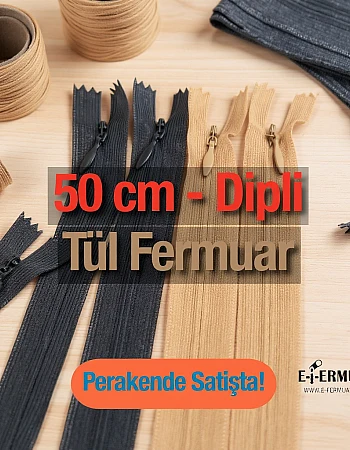
-350x450h.webp "Concealed Zipper 50 cm Tulle Dress and Evening Gown ZPHSN0050TUL")